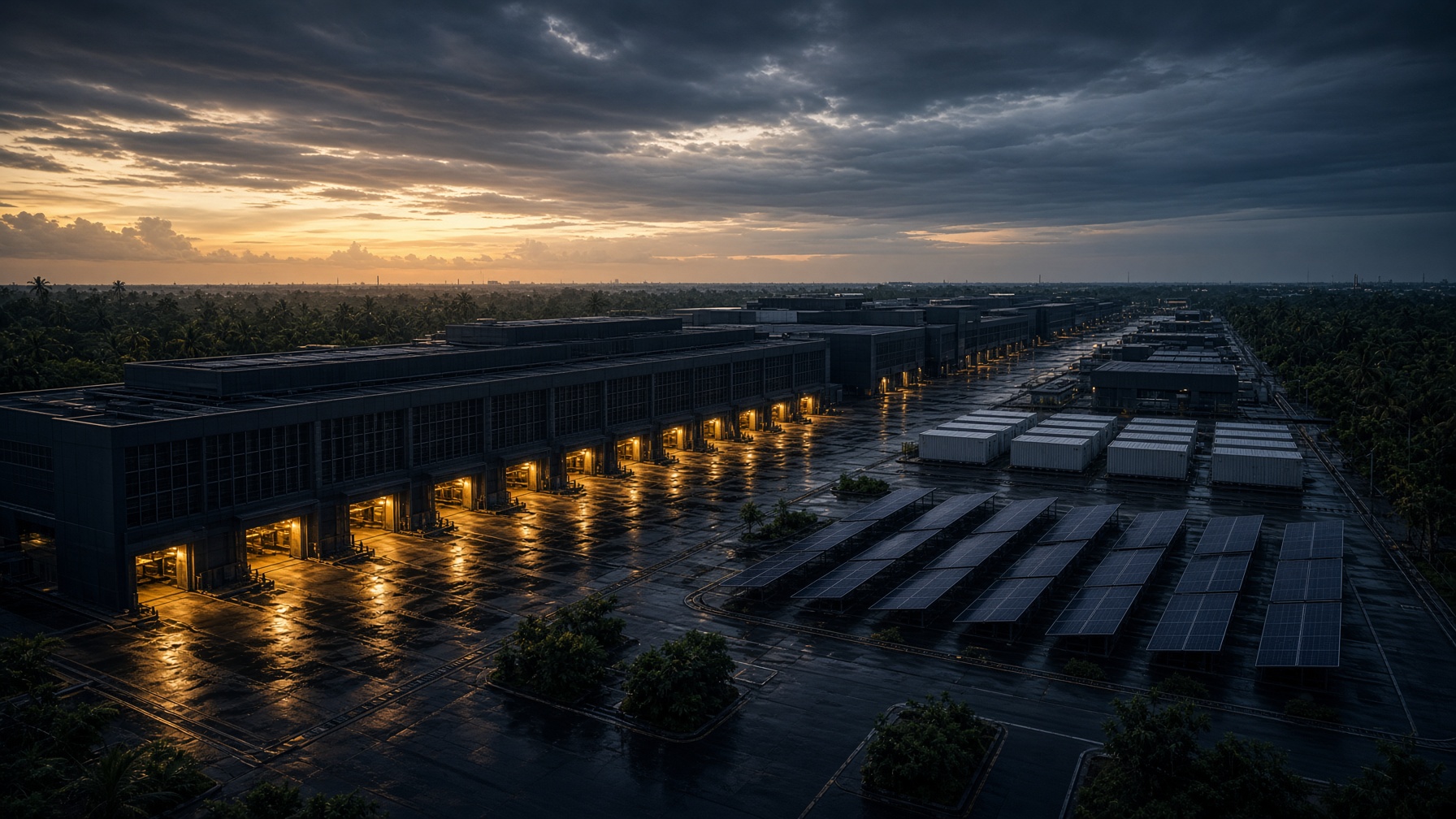
Behind-the-meter plant
On-site and adjacent solar, wind, and storage sized to the hall — not to a leftover roof.
Data center power
Data halls do not wait on a feeder. We develop on-site and adjacent generation — solar, wind, storage, and last-resort generation — so compute stays up without dragging the public grid to its knees.
AI and cloud loads are dense, flat, and intolerant of a flicker. The public network was not built for a campus that draws tens of megawatts around the clock. We design the power plant as part of the hall: rooftop and adjacent PV for the day, wind where the resource is real, BESS to ride through and peak-shave, and a genset or gas turbine that is insurance — not the operating plan.
Siting is power, water, and fibre in the same conversation. We work from the IT load and the PUE, then size behind-the-meter plant so the grid sees a well-behaved neighbour and the operator sees a power-purchase story they can actually keep.
On-site and adjacent solar, wind, and storage sized to the hall — not to a leftover roof.
Solar + Wind + BESS + backup generation as one architecture, with the engine last in the stack.
Interconnection that does not dump a square-wave campus onto a weak urban feeder.
Electrical design that respects PUE, heat rejection, and the hours the hall actually draws.
Also in the practice
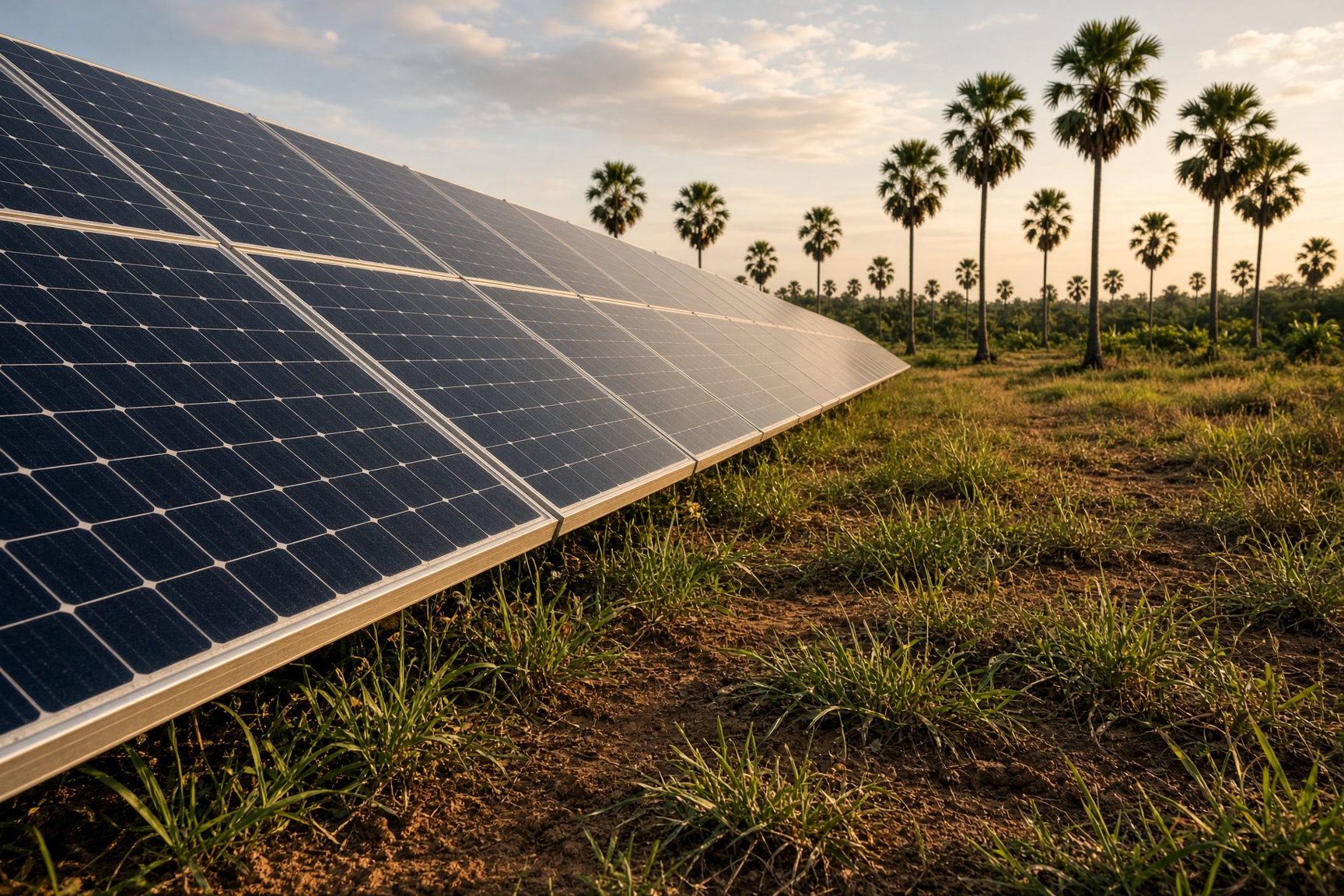
Utility-scale and off-grid photovoltaic plants, sited and integrated for output that lasts.
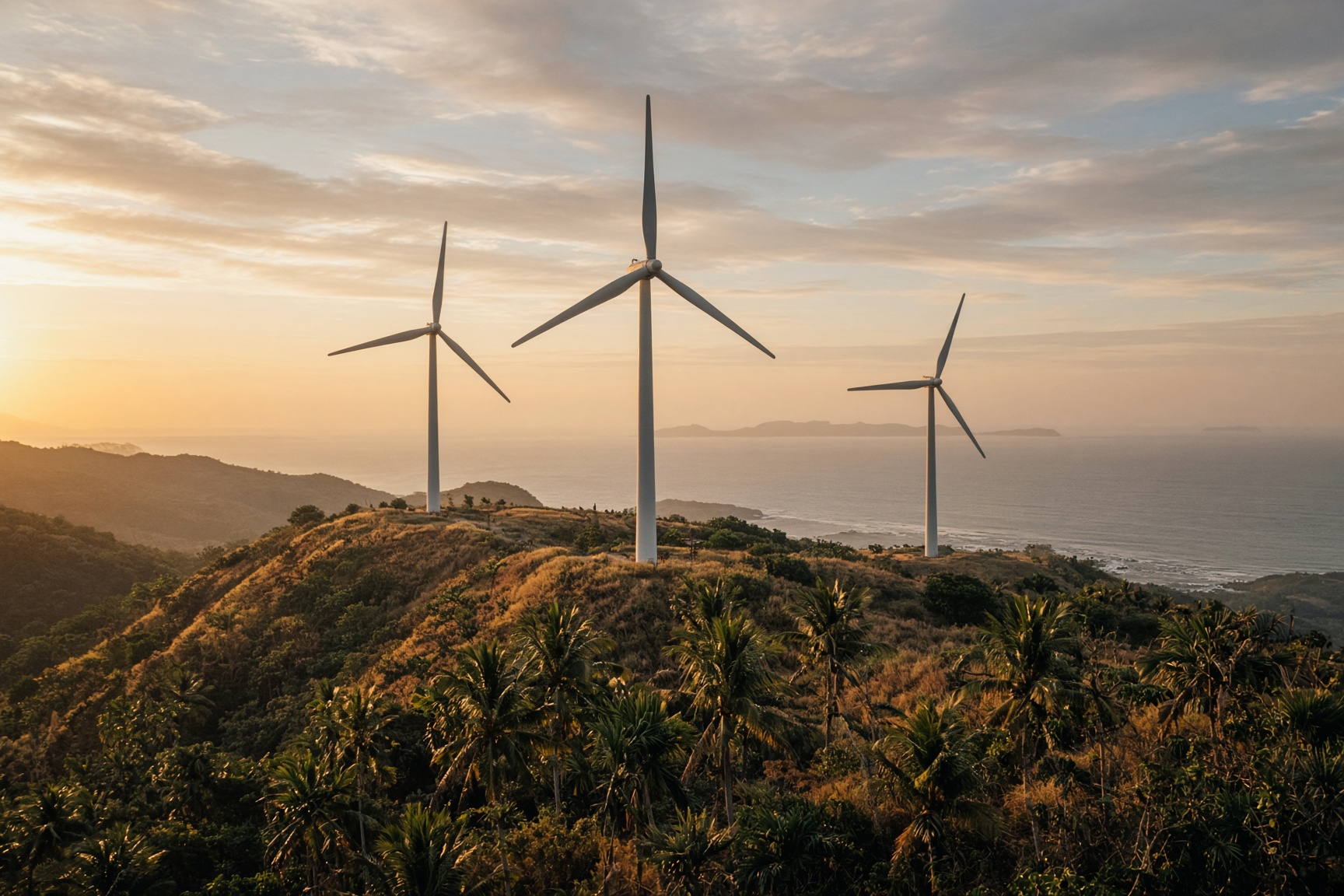
Onshore and distributed wind, sited for the real wind year — not a brochure curve.
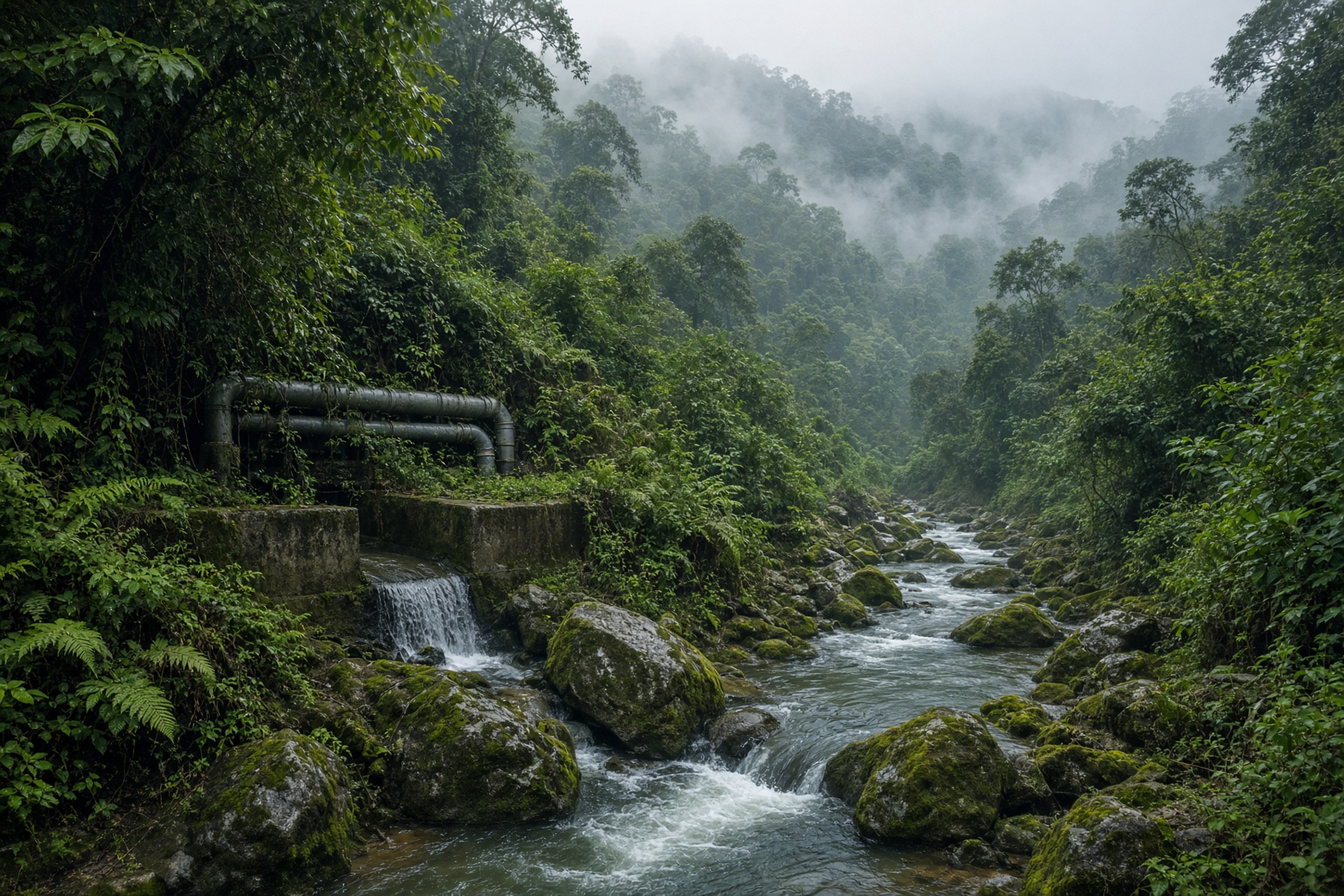
Greenfield run-of-river plants planned for sensitive catchments and long, quiet operation.
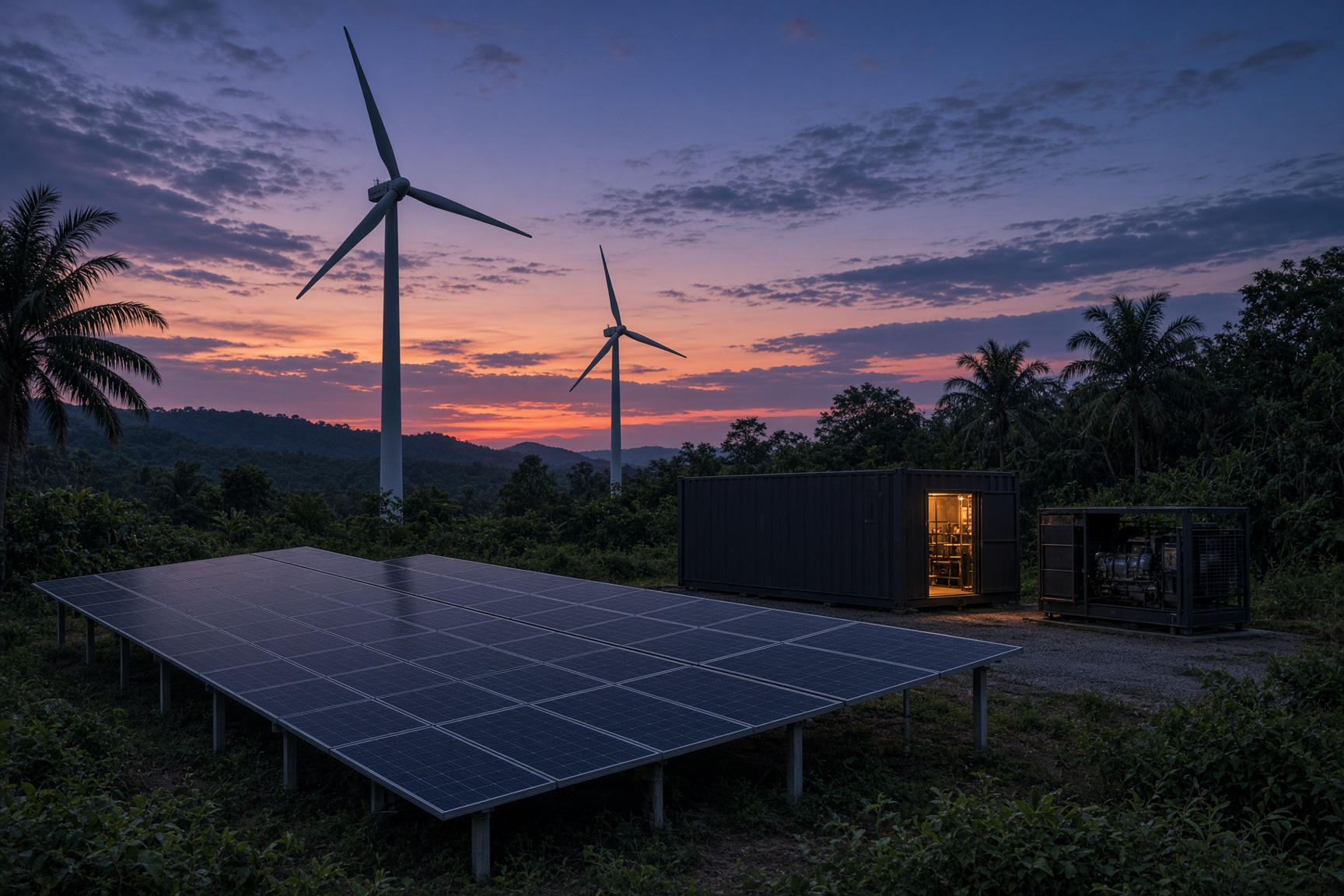
Solar + Wind + BESS + Genset — one plant that holds the load when any single resource cannot.
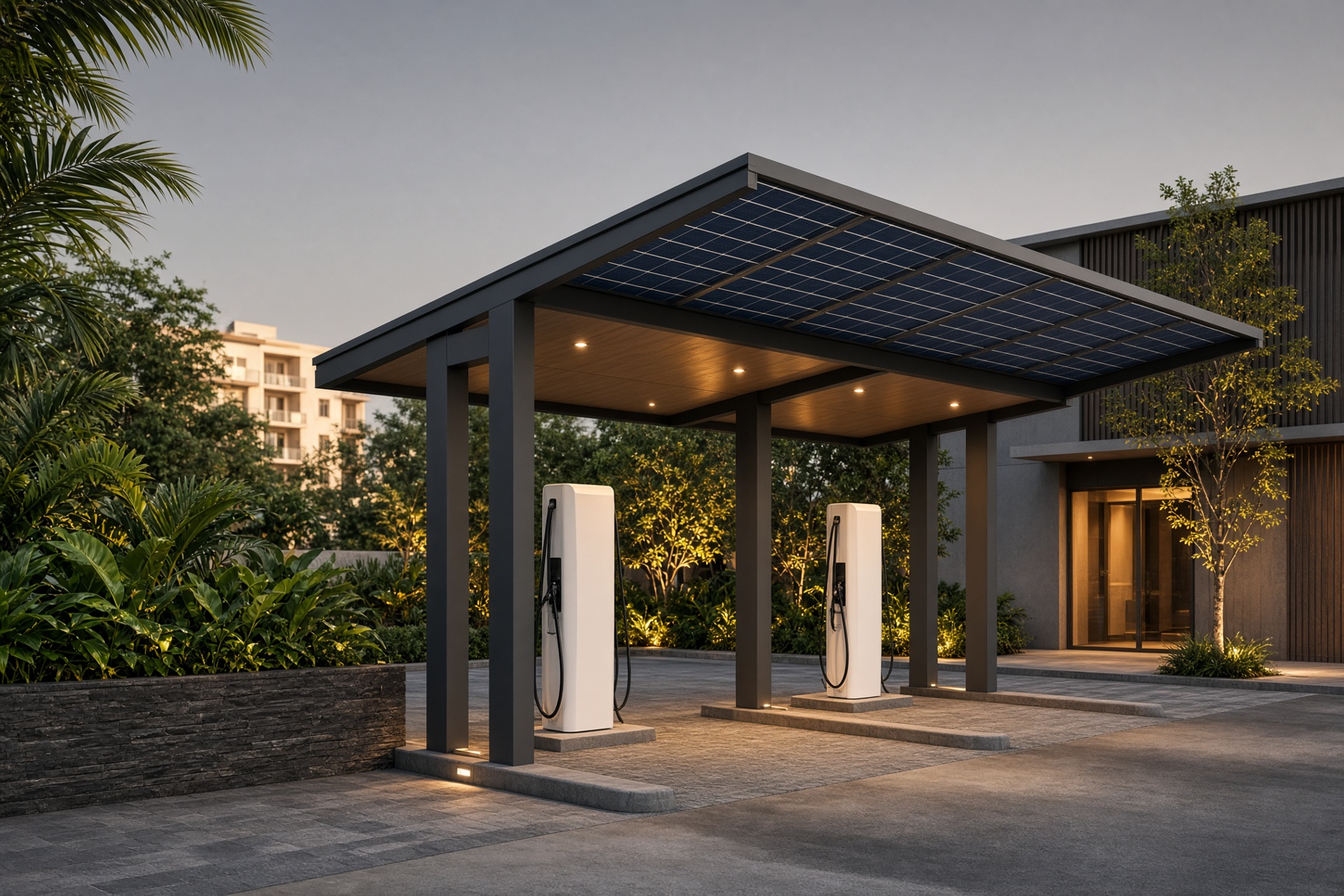
Batteries and solar-fed EV charging that shift energy from quiet hours to the peak.
Start a conversation
Tell us about the load, the land, and the constraint. We will tell you whether a plant belongs there.